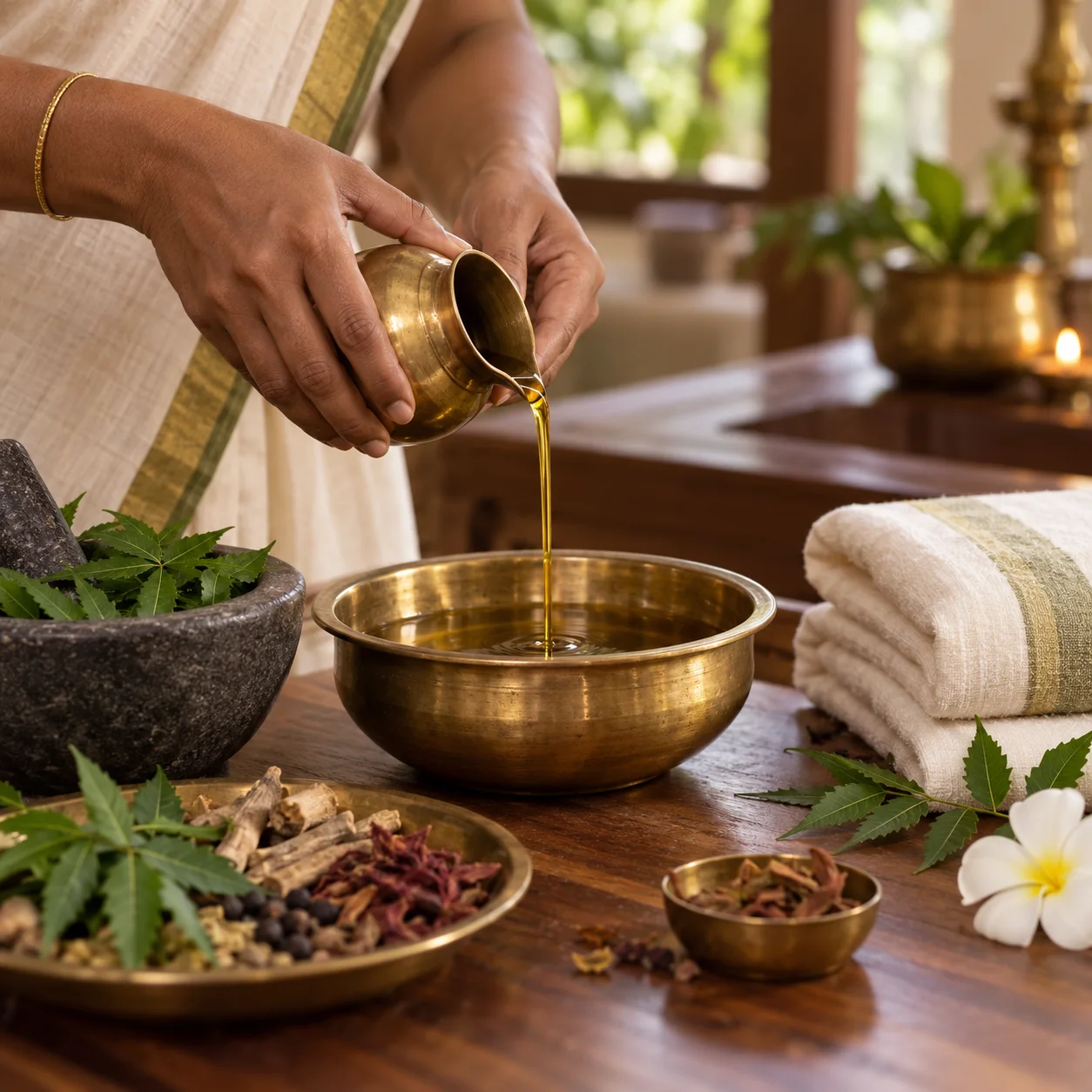
Panchakarma refers to a group of traditional Ayurvedic procedures. Today, the word is often used broadly in wellness settings, but the specific therapies, preparation, and aftercare can vary. That is why an individual assessment matters.
Start with suitability
Before any therapy, tell the practitioner about your symptoms, medical conditions, medications, pregnancy status, and previous treatments. Ask which procedure is being proposed, why it is suitable for you, and what you may need to do before and after it.
Know what to expect
A plan may include preparation, one or more procedures, rest, and follow-up guidance. The duration and intensity depend on the individual. Ask about practical details such as time at the clinic, food guidance, possible discomfort, and when to seek medical attention.
“Detox” language can be vague. It is reasonable to ask for a clear explanation of the intended goal and the evidence behind any health claim. Do not use Panchakarma as a replacement for necessary medical treatment.
Choose care you can understand
A good consultation leaves room for questions and informed choice. At Shreesh, the first step is a conversation about your goals and whether a traditional therapy belongs in your care plan.